Bench / Projects / Victorian Pine Chest: Removing Four Generations of Paint, and the Lead Test That Came First
Victorian Pine Chest: Removing Four Generations of Paint, and the Lead Test That Came First
A pine chest with at least four paint layers, the oldest of which was almost certainly lead-based. This record starts with the test, because on painted furniture the test is the first tool you pick up, not the last.
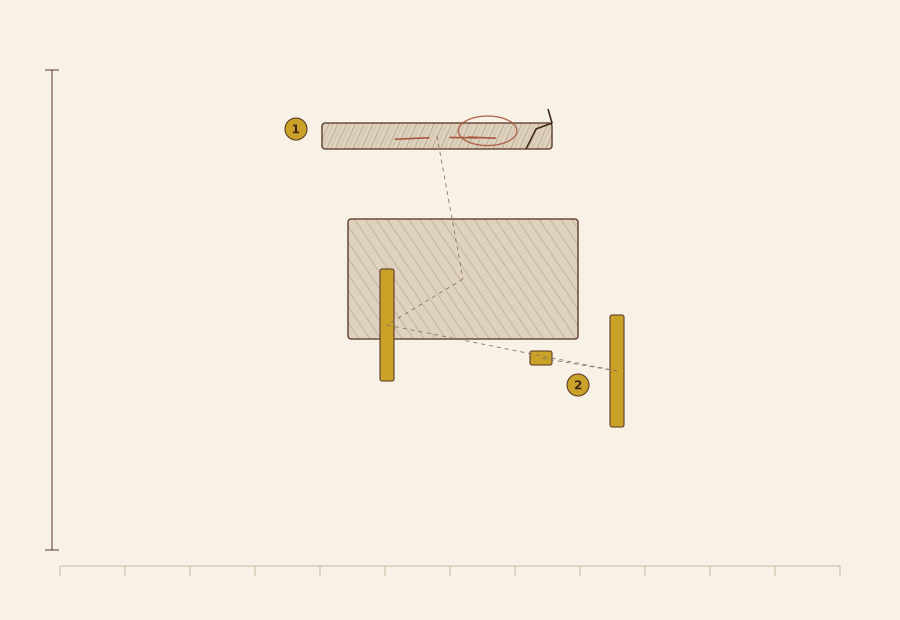
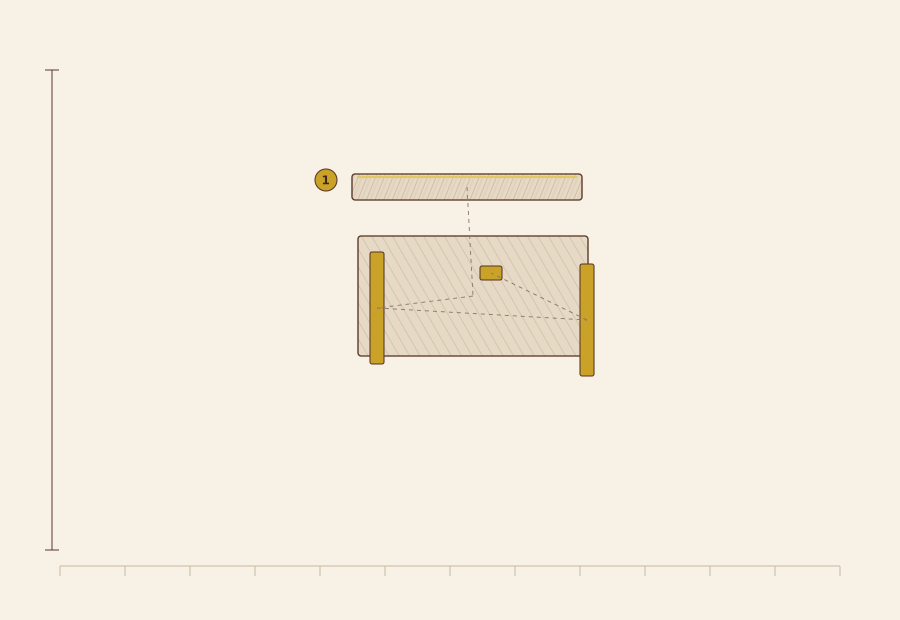 Before
After
Before
After
| Field | Value |
|---|---|
| Piece | Victorian pine chest of drawers, five drawers |
| Estimated date | 1890-1910 |
| Substrate | Solid timber |
| Old finish removal | Paint-safe water-based |
| New finish system | Waterborne polyurethane |
| Coats | 3 |
| Dry between coats | 6 h |
| Bench hours | 18 h |
| Materials cost | CNY 220-320 |
The swab comes out before the scraper
Four layers of paint on this chest. The top layer was a 1980s acrylic, the one under it a 1970s gloss, the one under that a cream gloss, and the bottom layer a thick, chalky white that was almost certainly lead carbonate in linseed oil.
Two swabs, one on the bottom layer in a hidden spot behind a drawer runner and one on the visible bottom layer at the back edge. Both went pink within 30 seconds. That result changed the plan for the whole job:
No sanding until the paint was gone. No heat gun on any lead-bearing surface, because heat stripping lead paint produces lead fume, which is the single worst way to be exposed to it. No dry scraping without a mask and extraction. Everything bagged.
The test cost about 20 yuan and fifteen minutes. Not testing would have meant dry-sanding four decades of paint into the air of a workshop someone works in every day.
Bench note: The infrared heat gun is a legitimate tool and it is the fastest way to take paint off a moulding. It is also the tool that turns lead paint into a vapour. Test first, always, on anything pre-1980.
Why a paint-safe stripper rather than a solvent one
The active layers here were old oil paints and one acrylic. A paint-safe, water-rinsable stripper keeps the film wet rather than dissolving it, and that has three advantages on a job this size.
It does not flash off, so a large flat panel can be done in one pass without the stripper drying out before you get to the other end. It does not attack the timber's surface the way a strong solvent does on a softwood like pine, where the earlywood and latewood take up solvent at different rates and the surface goes rippled. And it is not a vapour hazard in the way a methylene-chloride stripper is.
Its weakness is speed. Four layers on a five-drawer chest took 11 hours of work, which is roughly three times what a solvent stripper would need. On pine with lead paint in it, that is a fair trade.
Test, then set up the space before you open the tin
Swabs first. Then: the chest on a disposable drop sheet, in a space with cross-ventilation and a door that closes, a HEPA vacuum within reach, and a bin lined with a heavy bag for every scrap of paint waste.
Scrape the paint into the bag, not onto the floor. The whole point of a controlled strip is that the lead leaves the workshop in a sealed bag rather than as dust on the floor.
Strip the flat panels first, back to front
Paint-safe stripper brushed on about 2 mm thick, cling film over, 90 minutes. Then lift with a metal scraper held at a shallow angle, one pass per area.
90 minutes feels long and it is the difference between one pass and four. The stripper is still active at 90 minutes; at 30 minutes it has lifted the top two layers and the bottom two are still hard.
Each drawer front went back to the workshop four times before the last layer of chalky white came off cleanly.
Mouldings with a stiff brush, not a scraper
The chest had a cock-bead around every drawer front and a moulded plinth. A scraper cannot get into a bead without taking the profile off with it.
The technique that worked: stripper applied with a small brush, 90 minutes under film, then a stiff nylon parts brush worked along the bead with the stripper still wet, wiping the brush on a rag every few strokes. Slow, and the only way to keep the bead crisp.
Neutralise, and clean every trace of stripper out
Paint-safe strippers are alkaline. Left in the grain they will affect the next finish, sometimes as a patchy refusal to dry. Two rinses with clean water on a rag — wrung almost dry — then a wipe with a 1:20 vinegar solution to neutralise, then a final clean water wipe and 48 hours of drying.
Then the white residue: pine that has been under paint for a century has a grey-white weathered layer a fraction of a millimetre deep, and a light 120 then 150 pass with an extractor on takes it off. That is the only sanding in this job and it happened after the lead was gone.
Deal with the ink stain and the two filler patches
One drawer side had a 40 mm black ink stain and there were two patches of old filler where knots had dropped out. The ink came out with two-part wood bleach — part A then part B, 20 minutes apart, then neutralise with bicarbonate and rinse. Two applications took it from black to a faint grey that the finish made disappear.
The knot holes got a shellac knotting sealer first, then a wax-free filler matched to the pine. Pine knots keep bleeding resin for years; the shellac sealer is what stops the resin coming through a water-based finish and leaving a brown bloom.
Waterborne polyurethane, three coats, matte
Waterborne because this is a bedroom piece and a solvent finish would have needed the chest out of the house for a week. Three coats, 6 hours apart, applied with a brush and laid off with the grain.
The first coat raises the grain on pine badly. That is expected: a light 320 pass with a pad after coat one, a tack cloth, then coats two and three. Matte, not satin, because pine is a soft timber that dents, and a matte finish is the one that hides the dents a pine chest will collect in a bedroom.
Paint removal on old furniture involves lead, and lead is a serious health hazard with no safe exposure level for children. Test first, control the dust, and check local disposal rules. Information only.
Abrasive ladder

Grit sequence, coarsest first — each step removes the scratches of the one before.