Bench / Projects / Steam-Bent Ash Rocker: Replacing 90 Years of Failed Webbing Without Touching the Bends
Steam-Bent Ash Rocker: Replacing 90 Years of Failed Webbing Without Touching the Bends
A rocker where the bends were perfect and the seat was gone. The frame needed nothing but cleaning; the seat needed rebuilding from scratch, and the fabric had to be woven under tension onto a frame that is itself under tension.
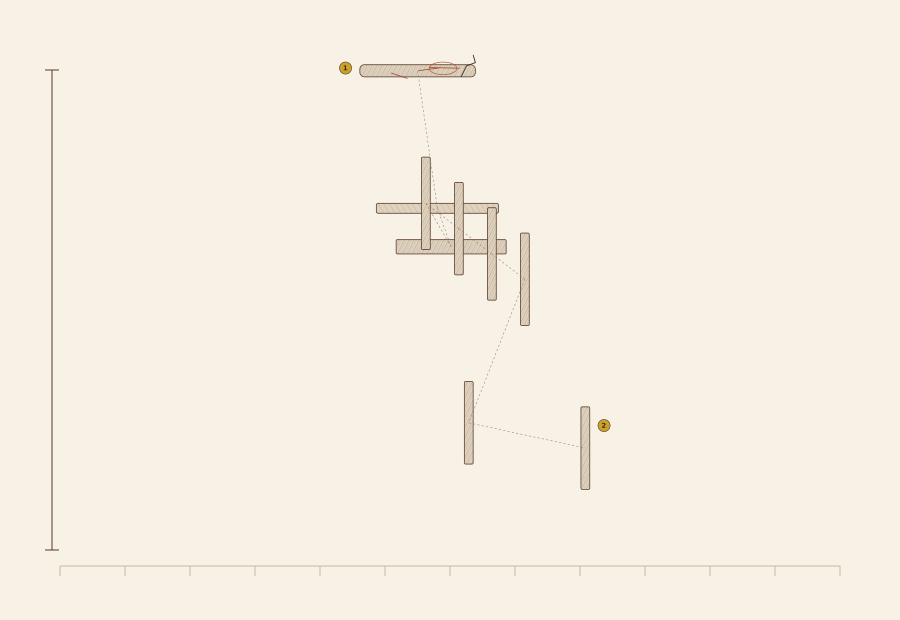
 Before
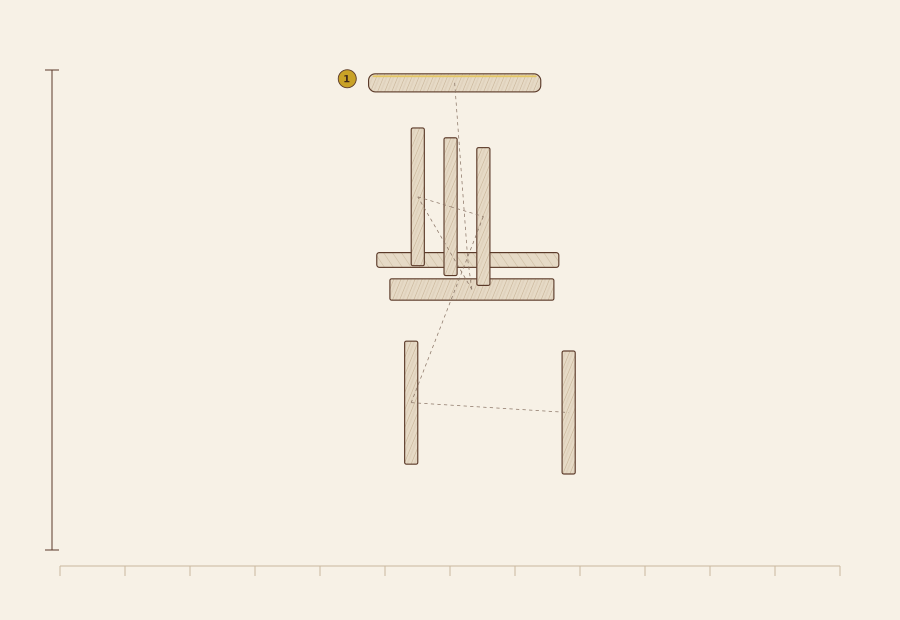
After
| Field | Value |
|---|---|
| Piece | Steam-bent ash rocking chair with a woven webbed seat |
| Estimated date | 1900-1930 |
| Substrate | Solid timber |
| Old finish removal | Caustic bath (tank) |
| New finish system | Shellac / French polish |
| Coats | 3 |
| Dry between coats | 4 h |
| Bench hours | 14 h |
| Materials cost | CNY 200-300 |
The frame needed almost nothing, and that is the point
This chair had been caustic-dipped at some point in its life — you can tell from the way the grain stands proud on the bends and the surface feels slightly furry under a cloth. Caustic dips strip the surface fibres of bent timber, and on a chair that relies on steam-bent ash for its spring, that matters.
The temptation was to strip and refinish the frame to match the new seat. That would have been the wrong instinct twice over. A second caustic treatment would have taken more strength out of the bends, and a stripped ash frame next to new webbing is not a chair, it is a reproduction.
What the frame got was: a wash with linseed oil soap, a light 000 bronze wool pass, three thin coats of shellac, and a wax. About three hours out of fourteen.
Bench note: Caustic dipping is why so many bentwood chairs from this period look flat and lifeless. The dip removes years of patina and the top layer of fibres at the same time. If you are buying a dipped chair, price the strength loss in, not just the finish loss.
Why the seat was rebuilt rather than repaired
The original seat was a woven webbing of jute tape, and after ninety years of use it had gone from a springy surface to a hammock. The webbing was still attached at every clip; it had simply stretched beyond recovery. Jute does not recover from that, and no amount of re-tensioning brings it back, because the fibres have been permanently deformed.
So the old seat was cut out — carefully, with a mask on, because that webbing held decades of dust — the tacks pulled, and the frame cleaned back to bare wood at the seat rails.
Cut out the old seat and check the rails
Old webbing off, tacks pulled with a proper upholstery hammer, seat rails cleaned. Then check the rails: on a chair this age the front rail is usually the first thing to go, because it takes the load of everyone who sits down heavily.
This one was sound but had a 70 mm split starting at the left corner where the rail meets the side. Same treatment as any split: hide glue worked in with a feeler-gauge shim, clamped across with a padded caul, 12 hours, then a 6 mm ash dowel cross-pinned through and cut flush.
Repair the rocker tip, which is a bending job
One rocker had lost about 40 mm of its tip. A square block replacement would have been visible and would have changed the way the chair rocks, so the tip was steam-bent.
Steam for 25 minutes on a 300 mm ash offcut, then onto a form made from the surviving rocker — a block with the correct curve cut into it and a second block clamped over the top. Leave in the form 24 hours, then shape the tip to match, scarf it onto the rocker with hide glue, and shape the scarf so the joint runs diagonally rather than straight across.
Clean the frame, do not strip it
Linseed oil soap at half strength, cloth wrung almost dry, one section at a time, immediate wipe-off. Then a 000 bronze wool pass with the grain on the flat parts and along the bends.
The bends are where the caustic damage shows as fuzz. A very light bronze wool pass takes the fuzz down without taking the patina with it. Sanding the bends would have flattened the cross-section, which on a chair like this is visible from the other side of the room.
Shellac the frame in thin coats
Three coats of blonde shellac, brushed thin, 4 hours apart. The first coat was thinned 1 to 1 with alcohol because the caustic-dipped surface is thirsty and uneven, and a full-strength first coat goes patchy on thirsty ash.
Blonde rather than garnet because the frame's existing colour is a pale honey from light exposure, and a warm shellac would have pushed it orange.
Weave the seat, working from the centre out
The pattern is a simple over-under weave, but the tensioning is what makes it work. Webbing stretcher: the tape is gripped, pulled until it reads tight, and clipped while still under tension.
Start with the centre warp tape, then work outward alternating sides, then the weft over the top. Working from the centre out keeps the frame from being pulled out of square, which is exactly what happens if you work left to right — the last tape ends up slack and the frame ends up a parallelogram.
Tension: about 3 mm of stretch under a firm thumb press when the tape is finished. Tighter and the seat feels like a board; slacker and it sags within a year.
Finish the weave with a tack row, and wax the frame
The finished weave got a blued tack every 20 mm along both rails — traditional, and it stops the tape edge fraying against the frame. Tacks hammered in at a slight angle, alternating, so they grip the rail rather than the tape.
Then wax on the frame only. The webbing gets nothing; jute and wax is a dust magnet, and a webbed seat needs to be able to dry out.
One chair, one seat. A frame that has been caustic-dipped once has lost strength in the bends; do not repeat the treatment. Information only.
Abrasive ladder

Grit sequence, coarsest first — each step removes the scratches of the one before.