Bench / Glossary / Patina vs Damage: Where Wear Stops Adding Value and Starts Taking It Away
Patina vs Damage: Where Wear Stops Adding Value and Starts Taking It Away
Not all wear is patina and not all damage is damage. The distinction is not aesthetic taste, it is a set of physical and commercial facts, and getting it wrong is the single most expensive mistake in furniture restoration.
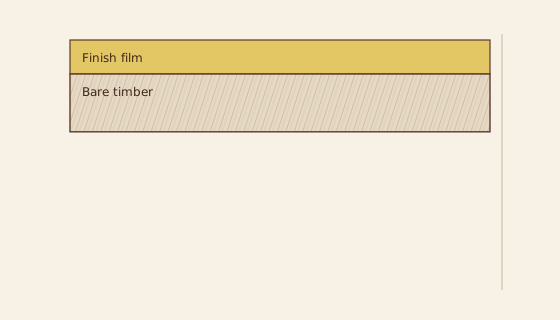
The four categories, in the order they are usually confused
<strong>Patina.</strong> Change to the surface produced by light, air, handling and time, where the surface is intact. Darkening of timber, the wear on the edges of a tabletop where hands rest, the soft sheen on a chair arm. Patina adds value because it cannot be faked and because it is evidence of the piece's history.
<strong>Wear.</strong> Loss of surface where the surface is gone, but the substrate is intact and stable. A scuffed edge where the finish has worn through to bare wood. Wear is ambiguous: it is evidence of use, which is positive, but it is also a break in the protective layer, which is negative. Whether wear is acceptable depends entirely on how much of it there is.
<strong>Damage.</strong> Loss of surface plus loss of substrate, or a structural change. A chip out of a drawer edge, a split in a top, a broken foot, a lifted veneer, a woodworm hole. Damage is unambiguously negative for value, and repairing it is usually the right thing to do — provided the repair is honest.
<strong>Fault.</strong> A defect from manufacture, not from use. A shrinkage crack that was in the timber when the piece was made, a misfitting drawer that has never fitted, a finish that has always been patchy. Faults are interesting to collectors and should never be "fixed", because fixing a fault erases evidence of how the piece was made.
Bench note: The diagnostic question is always "did this come from time, from use, or from the bench?" Patina is time. Wear is use. Damage is usually an accident. Fault is the bench.
Where wear crosses the line
A top with 60 % of its finish worn through to bare wood is not patinated, it is bare, and a bare top takes on water and stains unevenly. That is the point where wear becomes a problem rather than a feature: not at a fixed amount, but at the point where the wood is no longer protected.
The test: wet a white cloth, ring it out, and lay it on the surface for 30 seconds in the most worn area. If the wood darkens and stays dark for more than a minute after the cloth is off, there is no finish left there. If it darkens and recovers, there is.
Wear on an edge, at the point where a hand would rest or a foot would push, is almost always worth keeping. Wear in the middle of a flat field, where nothing would touch it, is usually damage in disguise — a spill, a scrub mark, a burn.
The value consequences, which are not what people expect
Stripping and refinishing a piece with good original patina removes more value than the refinishing adds, in almost every case, including pieces that are not especially old or valuable. A 1920s oak sideboard with 90 % original finish is worth more than the same sideboard freshly stripped, in the same way that a first-edition book with its original binding is worth more than the same book rebound.
Sympathetic repair does not reduce value. Filling a chip, relaying a lifted veneer, regluing a joint: these add value or hold it, and no sane buyer objects to them.
Bad repair destroys value faster than damage does. A wrong colour filler in a drawer edge, a screw through a sound joint where a dowel belonged, a machine-sanded top that is now 3 mm thinner and out of flat — these are worse than the original damage, because the original damage was at least honest.
Comparison: what happened to three pieces from the same workshop
- Stripped and refinished a 1780 oak press: patina destroyed, value fell by more than half. The cleaning-only treatment would have held it.
- Filled and touched in a 1930 walnut table: chips gone, colour matched, value held at the top of its band.
- Left alone a Victorian chest with a shrinkage crack in the side: the crack is a fault, not damage, and a buyer paid a premium for an untouched example.
A framework for judging, not a valuation. Value depends on the market, the maker and the provenance, and none of those are visible on the surface. Information only.